
If Truth is Objective, You Know NOTHING
The Paradox of Perspective

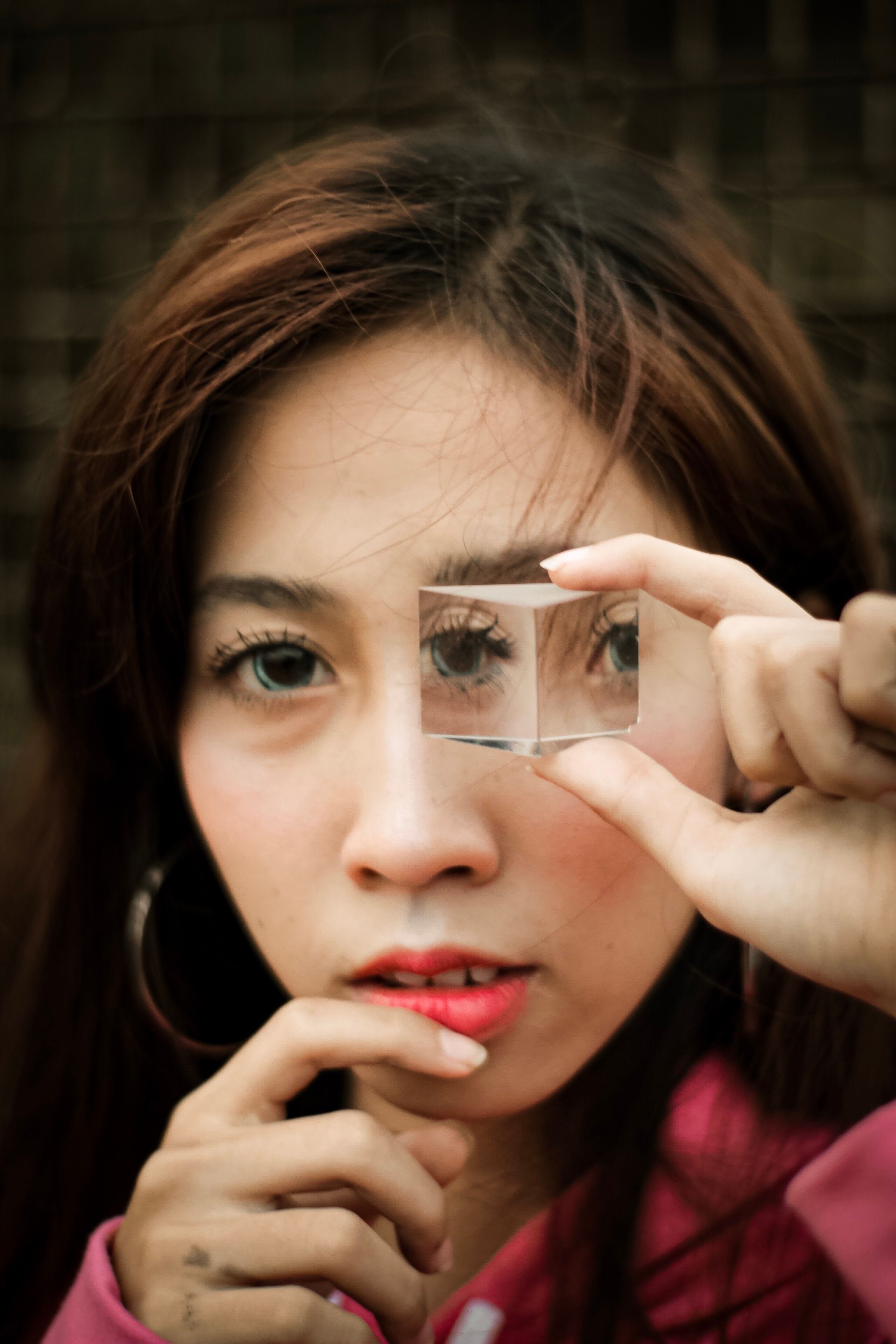
I’d like to present a paradox that challenges our concepts of knowledge, truth, and reality. I present this not ultimately to cause skepticism, but to inspire a quest to a deeper understanding of how you can know things. In this post, I present the challenge.
The challenge is this: how do you know your name?
That’s it. Answers are welcome.
Okay, I will unpack the challenge: it’s about how to know the truth about anything if truth is outside your perspective. I call it the Paradox of Perspective.
The Dilemma
There are two options:
Option 1: The truth about your name is independent of your perspective.
Option 2: The truth about your name depends on your perspective.
These options are exhaustive. Either the truth is independent of your perspective, or it is not. Either reality outruns your point of view, or reality is somehow bound to your point of view.
But each option generates a problem.
Option 1: Truth Beyond Perspective
Suppose the truth about your name is independent of your perspective.
This sounds right. Your name is not true merely because it appears true to you. You could be confused. You could misremember. You could be deceived. You could have been raised under one name while some hidden document records another. Your perspective may contain evidence, memories, feelings, and testimony, but the truth about your name seems to be something more than your present perspective.
So far, so good.
But now comes the problem of access. You only access what is within your perspective. You access documents you see from your perspective. You access thoughts as entertained in your perspective. You access evidence as it appears within awareness. You access memories you recall in your mind. You access testimony you hear. And so on. Everything you access, you access from your perspective.
The alternative is impossible. You cannot climb outside your perspective and inspect reality from nowhere. You do not step beyond your perspective and compare your beliefs with “reality in itself” as if you had a God’s-eye view. Everything you check, test, remember, infer, or perceive shows up within your field of awareness.
So here is the challenge: if the truth about your name is outside your perspective, and if you only access what is inside your perspective, then you do not have any real access to the truth about your name. It is beyond your perspective.
You might say, “I remember my name.”
But that gives you access to a memory. A memory is in your perspective, but the truth about your name is not. Hence, you are not actually accessing the truth about your name. The memory might have nothing to do with the truth. And even if the memory is based on the truth, that’s nice, but you don’t have access to that!
You might say, “Other people call me by that name.” But that gives you access to testimony as it appears to you.
You might say, “It is written on my birth certificate.” But that gives you access to a document as perceived and interpreted by you.
The basic problem is this: if truth stands beyond perspective, then there remains a gap between what appears within your awareness and what is true beyond it. That is the access problem. If truth is independent of perspective, then truth is objective. But if truth is objective (outside your perspective), then it is out of the reach of what you access.
Option 2: Truth Within Perspective
Now take the other path. Suppose the truth about your name depends on your perspective.
That seems to solve the access problem. If truth is inside your perspective, then you do not need to escape your awareness to reach it.
But now you limit your access to your mere perspective, and truth becomes entirely subjective. What is true becomes is merely seems true to you.
This subjective account of truth leaves out the external world. How can you know what happened before your current awareness? How can you know another mind exists? How can you know the sun will rise tomorrow? How can you know your name?
The skeptical conclusion also undermines itself. If you say, “Reality beyond my perspective cannot be known,” do you know that? If you see that skepticism follows, then you already know something.
So we have a puzzle. If truth is independent of your perspective, how do you access it? If truth depends on your perspective, how do you escape subjectivity? And if knowledge is impossible, how could you ever know the steps that lead you to that conclusion?
The question is not merely whether you know your name. The question is whether you know anything of significance.
Solutions, anyone?
I’ll post a solution in my next post. It’s ready: “Your Power to Know.”
p.s., I am creating The Truth-Seeker’s Guide to Power for people who want to grow in clarity when life’s deepest questions feel confusing. This course will be provide you a systematic guide to your powers in a series of steps in a personalized way.
This is a nice way to state a classic problem.
But notice the problem is created by a spatial metaphor. When you first pose the dilemma, the options are that truth "doesn't depend on" or "depends on" perspective. But then when you problematize the first option, you say you only have access to that which is "within" your perspective, suggesting that objective truth is "outside" your perspective. You've then established a metaphor in which perspective is a container with some things in it, and some things outside of it, a perfect dichotomy. It seems to me one solution to the problem is to reject this metaphor. Don't get me wrong, it is a very natural metaphor, and we use such spatial metaphors to reason about many things. But whereas inside/outside is a perfect dichotomy, perspective often doesn't work that way. An image can be fuzzier or clearer. A sound can be more or less distinct. Feelings can creep up on you gradually. These are all examples of how things are not perfectly inside or outside our "perspective."
Besides, I think one has to accept that our perspective is an imperfect tool for getting to the truth. Do I know nothing? Well, Socrates said that admitting that was the first step to wisdom, and I think that in a profound sense he was right. I suppose the belief that there is "objective" truth is a statement of faith, rather than a conclusion I can ever be supremely confident in.
It seems that truth can be objective but our knowledge of truth can only be subjective.